At UBA Business Series, Experts Say Innovation, Passion Crucial to building Successful businesses


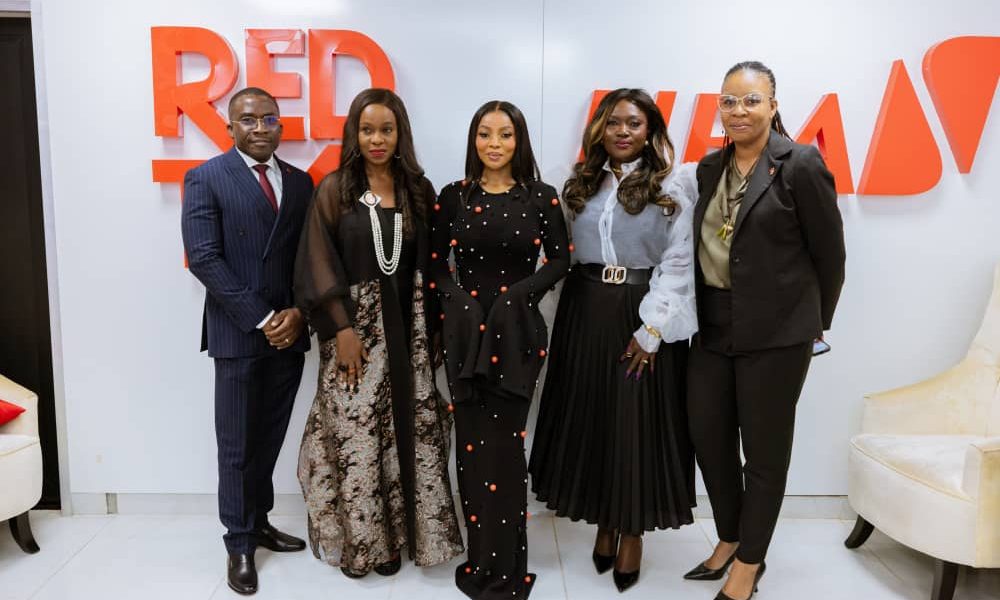
Building businesses that stand the test of time requires a blend of innovation, unwavering focus, and passion. This was the key takeaway from the latest edition of the United Bank for Africa (UBA) Business Series, hosted on Thursday, 

With the theme: “Profit with Purpose, Business Continuity,” the event which was held at the Tony Elumelu Amphitheatre, UBA House, Marina, Lagos, brought together top industry leaders and entrepreneurs who shared actionable insights and strategies for ensuring business resilience and sustainability in today’s dynamic economic environment. 

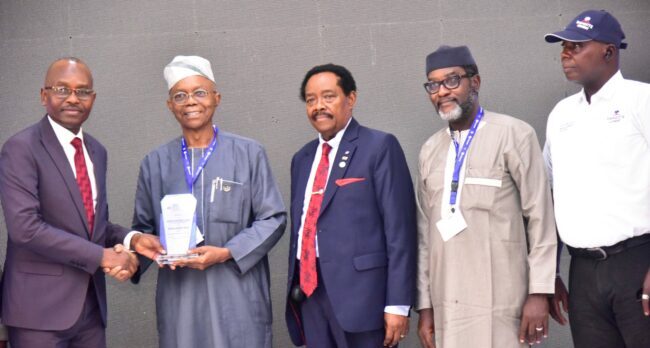
Founder, Terra Kulture, Bolanle Austen-Peters, Chief Executive of Asadtek Group Limited, Ghana; Dr. James Asare-Adjei; Award winning TV Personality & Multi Media Entrepreneur, Frank Edoho, Celebrated multimedia personality, Toke Makinwa and founder of Nigeria’s pioneering indigenous premium coffee brand, Happy Coffee, Princess Adeyinka Tekena, were on ground to share their business journey and give insights on how businesses can stand the test of time and thrive in a competitive environment.  

Bolanle Austen-Peters who is also a Prominent Lawyer, Award Winning Film Director, and Producer, was the keynote speaker at the event and she spoke on the need for small and medium scale businesses to define their purpose, build a workable framework and have a team that shares in your vision.

On how she has run a business successfully for over 20 years, she said, “I can never overemphasise the role that purpose plays in your business. There is the need for business owners to set clear goals and achievable targets. From Day one, I started with having an organisational structure like what we have in banks, complete with legal structure, a board of Directors, administrative Officers, and all. 

Continuing she said, “The truth is that if you do not have a framework for your business, you may just be another business from the street. Putting together a structure shows that you are in for serious business, and people will treat your business as such,” she explained. 

James Asare-Adjei from Ghana, who also shared that key essentials like being innovative and having integrity said that MSMEs need to identify areas that they can excel at and work towards building it. “As business owners, you need to take advantage of the market available to you, and ensure that you add value at every point. 

For Frank Edoho, passion remains an essential ingredient that drives business growth. “Passion is very important, as business owners, you should stick to your guns and learn from what others are doing and add it to your experience to make your business better,” he explained. 

“One of the things I did to grow my brand was that I was very focused,” said Toke Makinwa, who recalled her humble beginnings as a banker and later a broadcaster. “I kept the right attitude and surrounded myself with people who are team builders. These are winning strategies anytime,” she noted. 

Princess Adeyinka Tekena, who is a beneficiary of the Tony Elumelu Foundation (TEF) Grant, said the $5,000 grant she won in 2015, helped to build her business from ground up and the business has been thriving for over 10 years now. She pointed out that tenacity, determination and financial discipline have been some of the factors that have contributed to the growth of her small business. 

UBA’s Group Head, Marketing and Corporate Communications, Alero Ladipo, who commended the participants for sharing valuable insights explained that with these regular capacity building programs, UBA focuses on empowering other business owners to build sustainable businesses. 

“At UBA, it is not just about Banking, we are also passionate about helping our customers to grow thriving businesses, and that is why we do this on a regular basis,” she noted. 

The UBA Business Series is a regular seminar/workshop organised by the bank as one of its capacity-building initiatives, where leading business leaders and professionals share well-researched insights on relevant topics and best practices for running successful businesses, especially in difficult business challenges.

United Bank for Africa is one of the largest employers in the financial sector on the African continent, with 25,000 employees group wide and serving over 45 million customers globally. Operating in twenty African countries and the United Kingdom, the United States of America, France and the United Arab Emirates, UBA provides retail, commercial and institutional banking services, leading financial inclusion and implementing cutting edge technology.
Dangote says Nigeria Can Become a Refining Hub…Saves Africa's $17bn Petrol Products Imports


Nigeria must enhance its crude oil production capacity and effectively manage its crude supply to ensure adequate feedstock for domestic refineries, in order to transit from a net importer to a net exporter of petroleum products.

Chairman of Dangote Refinery and Petrochemicals Company Limited, Aliko Dangote, made this assertion during his keynote address at a summit held in Lagos by the Crude Oil Refinery Owners Association of Nigeria (CORAN). The event attracted top government officials and key stakeholders from the midstream and downstream sectors.

Addressing Nigeria’s potential as a refining hub, Dangote expressed concern that, despite producing over 3.4 million barrels of crude oil per day, Africa imports around 3 million barrels of petroleum products daily. He noted that these imports, primarily from Europe, Russia, and other regions, are estimated to cost approximately $17 billion in 2023.  He urged that Nigeria could capitalise on this situation to become a net exporter of refined petroleum products, as the markets would be more competitively served from Nigeria.

“Both the crude oil and the petroleum products will travel shorter distances. The logistics costs of floating storage will be eliminated, and countries can purchase their petroleum product requirements just-in-time. Nigeria and Africa can become completely self-sufficient, and we can keep all the value on our shores. We have done it in cement, and we can certainly do it for petroleum products.

“It is worth noting that the Dangote Refinery already produces sufficient diesel and jet fuel to meet Nigeria’s demand. We recently started the production of PMS and will soon ramp up to meet Nigeria’s needs. Our refined products have been exported to diverse markets, including Europe, Brazil, the UK, the USA, Singapore, and South Korea,” he added.

Represented by Engr. Mansur Ahmed, Group Executive Director of Dangote Industries Ltd, Dangote emphasised that Nigeria must develop a refining capacity of 1.5 million barrels per day and prioritise domestic crude supply obligations to seize this opportunity. Acknowledging the arising and future challenges, he urged the government to incentivise investors, contrasting this with the Dangote Oil Refinery, which was built without any government incentives.

“…It is unfortunate that while countries like Norway are putting oil proceeds into a future fund, in Africa, we are spending oil proceeds from the future. We will also need to prioritise the implementation of domestic crude supply obligations. We will need to expand our crude oil production capacity to support demand from new refining capacity. The government of President Bola Ahmed Tinubu is taking active steps to achieve this through fast-tracking IOC divestments and other initiatives,” he stated.

Emphasising that global developments in the petroleum sector, particularly in Europe, will disrupt historical trade flows for refined petroleum products in Africa, Dangote stated that Nigeria is uniquely positioned to capitalise on this opportunity and become a significant player in the global oil industry. He called for consultation, collaboration, and cooperation among stakeholders.

“As a vibrant exporter of refined products, Nigeria will witness an improvement in its balance of trade and generate much-needed foreign currency. Nigeria’s potential as a refining hub is clearly not in doubt; let us work together to make it happen,” he urged.

The foremost industrialist noted that the summit’s theme, “Making Nigeria a Net Exporter of Petroleum Products,” would have seemed unrealistic a few years ago, and added that despite being Africa’s largest crude oil producer, Nigeria has historically relied on imports to meet its refined petroleum product needs.

However, he emphasised that the Dangote Petroleum Refinery and Petrochemicals is poised to transform Nigeria from a “net importer” to a “net exporter” of refined petroleum products, establishing the country as an emerging player in global downstream trade flows; with refined products already exported to various markets, including Europe, Brazil, the UK, the USA, Singapore, and South Korea.

Commending Dangote for this transformation, Chairman of IPPG/Waltersmith Refinery & Petrochemicals Co. Ltd, Abdulrazaq Isa, called on the government to support domestic refiners by ensuring the availability of crude, adhering to domestic crude supply obligations, and implementing effective pricing and monitoring measures to prevent smuggling.

Chairman of CORAN's Board of Trustees and CEO of Integrated Oil & Gas, Captain Emmanuel Iheanacho (rtd), remarked that the Dangote Oil Refinery has set a high standard by producing Euro-V products, thus protecting citizens from exposure to high-sulphur products. He noted that transforming Nigeria into a net exporter will bring numerous benefits but reiterated the need for increased investment to boost crude production, lamenting that Nigeria loses approximately $83 billion annually by not meeting its OPEC quota.

While acknowledging that tank farms remain essential despite local refining, Iheanacho urged the Nigerian Midstream and Downstream Petroleum Regulatory Authority (NMDPRA), to consider cancelling import licences, as Nigeria can now meet its local demand.

Chairman of Major Energies Marketers Association of Nigeria (MEMAN), Huub Stokman,  stated that Nigeria is on the verge of becoming Africa's refining powerhouse, which will significantly boost the economy. The Chairman of CORAN, Momoh Oyarekhua, also expressed concern over challenges related to crude supply and stated that domestic refiners will work with regulators and stakeholders to address these issues.


The Minister of State for Petroleum Resources (Oil), Senator Heineken Lopkobiri,  assured that the government would continue to refine frameworks to enhance crude production and support domestic refineries. His counterpart from the Ministry of Industry, Trade and Investment, Dr. Doris Uzoka-Anite, emphasised the Tinubu-led administration’s commitment to ensuring value addition for mineral resources before export.

Two panel sessions were held to discuss Nigeria’s downstream petroleum refining sector and its potential impacts, as well as policy strategies for achieving self-sufficiency in petroleum products.


Segun Agbaje’s N1 trillion Facade! Gtbank’s alleged windfall fails integrity test


-From Bankers to Banksters: As Agbaje’s Gtbank Posts Astronomical Profits, Nigerians Grapple with The Sinister Reality of Systemic Overcharging, Extortion

– FIRS Boss Zacch Adedeji Called to Action: Stakeholders Demand Accountability for Gtbank’s Ill-Acquired Wealth, Urging A Full 35% Tax on the Alleged N1 Trillion Profit


By Gbemisola Ogunseye

In a Nigeria grappling with inflation that erodes the purchasing power of its citizens and where startups wither under financial strain, one might mistake GTBank’s recent declaration of a staggering N1 trillion profit as a beacon of corporate triumph. But this is no triumph.

Rather, it is frantic fibbing taken to unimaginable heights. Aside from being a desperate lie from the pit of hell, Segun Agbaje’s recent declaration that GTBank has made N1 trillion in profit, also resonates as a warning of the dark forces at play in a financial ecosystem that thrives not on innovation or economic stewardship but on posturing, predation, exploitation, and dubious practices that have siphoned wealth from countless corporate clients and individual depositors alike.

Under Agbaje’s leadership, GTBank has morphed into the epitome of what is wrong with the Nigerian banking industry—a system that does not nurture growth but feeds on the vulnerability of its customers. Agbaje, now proudly boasting a one-trillion-naira profit, is seen by many as a man out of his depth—a soulless liar and opportunist who, despite his criminality and shady deals, lacks the brilliance and finesse to cover his tracks. What lies beneath the glossy surface of this astronomical profit is a tale of overcharges, illicit deductions, shady loans, and the systematic destruction of depositor trust.

The Fragile Facade of GTBank’s Triumph
Nigerians watched in disbelief as GTBank announced a mind-boggling N1 trillion profit, a sum so grand and implausible in today’s distressed economy. How is it that in a nation where inflation gallops unchecked, where startups buckle under financial weight, and corporate ventures scale back operations to survive, GTBank could emerge with such monumental gains? The numbers defy reason, drawing suspicions and raising the alarm across the financial sector.

Banking industry pundits and auditors are not buying the triumph narrative. What should be a victory lap is instead a grim reality check—a warning that something is deeply amiss. At the core of GTBank’s windfall lies a ruthless, almost predatory, profit-making machine that thrives by exploiting its customers, from corporate giants like Innoson and Stallion Group to the everyday Nigerian who places their trust in the bank.

GTBank’s profits, far from being earned through ethical banking practices or savvy investments, appear to have been built on a foundation of systemic overcharging, illicit deductions, and questionable fees imposed on both corporate and individual accounts. These practices have long eroded the savings and wealth of countless customers, leaving them depleted while Agbaje and his team celebrate ill-gotten gains.

It is no coincidence that Agbaje’s GTBank has become synonymous with the term “banksters”—a derogatory moniker that highlights the bank’s transformation from a financial institution into a predatory cartel. The accusations are mounting. Corporate clients who have had long-standing relationships with GTBank, some stretching back decades, have begun to call for forensic audits of their accounts. They suspect that GTBank’s impressive profit figures are not the result of sound financial management but rather of illegal deductions, overcharged fees, and fraudulent practices.

Notably, billionaire entrepreneur Femi Otedola’s forensic audit of his accounts with GTBank set off a wave of alarm bells across the corporate sector. Others have followed suit, delving into years of financial transactions only to discover that they, too, had been victims of the bank’s profit-maximizing schemes. Many corporate clients are now realizing that their loyalty was repaid with blackmail and exploitation, as GTBank siphoned off their wealth to fuel its bottom line.

Far from contributing to Nigeria’s economic development, GTBank under Agbaje has perfected the art of round-tripping and blackmailing its customers. Instead of financing industry, supporting innovation, or fostering business growth, the bank has become a machine designed to generate profits at any cost—even if it means crippling the very companies and individuals who once depended on its services.

For all his clever maneuvering, Agbaje’s façade is beginning to crack. Those who have worked closely with him describe a man out of his depth, someone who—despite his ruthlessness—lacks the superior intellect and brilliance to effectively cover his tracks. The more one digs into the inner workings of GTBank, the more evident it becomes that Agbaje’s so-called triumph is built on a fragile foundation. His ill-acquired profit may seem like a victory today, but the mounting scrutiny could very well lead to his undoing.

Agbaje is no visionary leader. His success is not built on strategic brilliance or financial acumen but on a desperate, cynical exploitation of the most vulnerable in society. He is not the mastermind behind a banking revolution; he is, instead, the figurehead of a failing system that thrives on destruction, both financial and personal.


As the outcry over GTBank’s N1 trillion profit intensifies, pressure mounts on the Chairman of the Federal Inland Revenue Service (FIRS), Zacch Adedeji, to intervene. Stakeholders are demanding that Agbaje and GTBank be held to account for their ill-acquired wealth, calling on Adedeji to ensure that the full 35% tax on the bank’s profit is collected. The sheer size of GTBank’s profit suggests that there is more to the story than meets the eye, and there are rising calls for a thorough investigation into the bank’s practices.

But the issue is larger than just collecting taxes. There is a growing demand for systemic reform in Nigeria’s banking sector.

Customers are calling for transparency, for an end to the predatory practices that have become all too common in Nigerian banking. There is a palpable sense of betrayal as more and more people realize that the banking institutions they trusted with their money have, in fact, been working against their interests.

-Africa Ratings


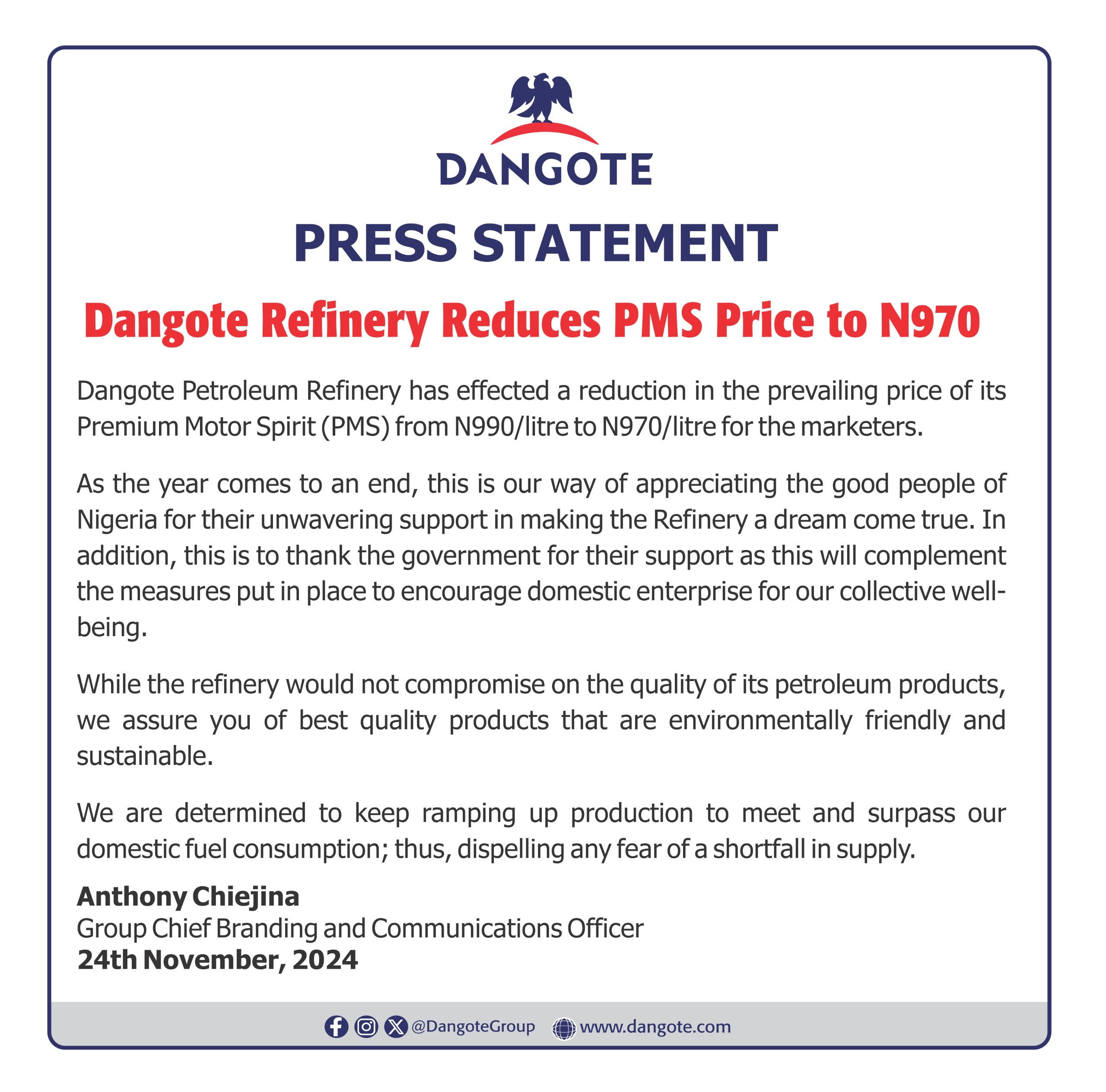
Dangote refinery reduces fuel price to N970/litre


The Dangote Petroleum Refinery says it has reduced the price of its Premium Motor Spirit from N990 per litre to N970/litre.

Ijebu Nation gathered that this is the amount marketers would buy the product from the refinery.

In a statement released on Sunday, the Group Chief Branding and Communications Officer of the Dangote Group, Anthony Chiejina, said the reduction was to appreciate Nigerians as the year ends.

“As the year comes to an end, this is our way of appreciating the good people of Nigeria for their unwavering support in making the refinery a dream come true. In addition, this is to thank the government for their support as this will complement the measures put in place to encourage domestic enterprise for our collective well-being,” the statement read.

Chiejina said the refinery would not compromise on the quality of its petroleum products while assuring Nigerians of the best quality products that are environmentally friendly and sustainable.

“We are determined to keep ramping up production to meet and surpass our domestic fuel consumption; thus, dispelling any fear of a shortfall in supply,” the statement concluded.

GTCO! CBN Sets the Record Straight,Responds to Attempts to Misinform the Banking Public

In a show of strong support for GTCO and move to debunk false allegations being levelled against the GTCO and its Executive Management by faceless and unqualified entities using the media, the Central Bank of Nigeria (CBN), issued a Press Release today reassuring the public that their deposits with Nigerian Banks are safe.

The Statement titled, “CBN Reaffirms Commitment to Financial System Stability, Safety of Depositors’ Funds” and signed by Ag. Director, Corporate Communications, Hakama Sidi Ali (Mrs.), begins with a firm assurance: “The Central Bank of Nigeria (CBN) wishes to reassure the public of its unwavering commitment to ensuring the stability and reliability of the Nigerian financial system.” It further stated, “The CBN recognises the crucial role that confidence plays in banking operations and wants to affirm that all deposits in Nigerian banks are secure. The CBN actively ensures that banks adhere to established regulations and best practices to maintain the integrity of our financial system. Regular stress testing is conducted to identify potential vulnerabilities, helping to ensure that our financial institutions are resilient.”
On how the Monetary Authority fulfills its oversight responsibility, ensuring system-wide monitoring of licensed Banks in Nigeria as well as their offshore operations, the Statement says, “In addition, the CBN has implemented Early Warning Systems that proactively detect and address emerging risks, allowing us to provide timely solutions to any foreseen issues. The Bank’s approach to Risk-Based Supervision ensures that it focuses its regulatory efforts on institutions that may pose the highest risk to the financial system. This targeted strategy allows it to maintain a robust oversight mechanism while promoting the overall health of the banking sector. Furthermore, the CBN has established Memoranda of Understanding with the various countries where Nigerian banks and subsidiaries are located. This collaboration enhances regulatory coordination and ensures that our banks operate within a safe and sound framework in accordance with banking regulations, both domestically and internationally.”
In closing, the Ag. Director said, “The CBN remains dedicated to fostering a secure banking environment where depositors can be fully confident in the safety of their funds. It will continue to monitor and adapt strategies to safeguard the financial interests of all Nigerians and stakeholders in our financial system.”

Access Corporation, MTN Nigeria drive equity market to N607bn gain


The Nigerian equity market gained N607bn in market capitalisation in the past week, on the back of buying interest in large-cap stocks like Access Corporation and MTN Nigeria.
The All-Share Index appreciated by 1.06 per cent to close at 97,456.62, while the market capitalisation rose by 1.10 per cent to N56tn.
All other indices closed higher, except for the Growth Index, which saw a depreciation of 0.03 per cent, while the Alternative Securities Market Index remained flat. The upward trend was driven by investor interest in major stocks, such as Access Corporation, which gained 2.39 per cent, and MTN Nigeria, which rose by 7.37 per cent. Across various sectors, the performance was bullish, with gains recorded in consumer goods (1.47 per cent), insurance (1.59), industrial (0.17 per cent), banking (5.12 per cent), and oil and  gas (two per cent). In terms of activity, the financial services industry led the charts, accounting for 1.71 billion shares valued at N26.99bn traded in 19,277 deals, contributing 66.05 per cent and 52.71 per cent to the total equity turnover volume and value, respectively. Following closely was the oil and gas industry, which saw 332.83 million shares worth
N12bn traded in 9,956 deals.  The services industry ranked third with 146.189m shares valued at N530.544m traded in 3,404 deals.
During the week, 43,535 units valued at N13.476m were traded in 122 deals, up from the 23,881 units valued at N8.240m transacted in the previous week. Overall, 52 equities appreciated, an increase from the 36 equities recorded in the previous week, as 31 equities saw price declines, compared to 46 in the prior week, while 68 remained unchanged, slightly lower than the 69 recorded earlier. Meanwhile, the Federal Government’s savings bonds were listed on the Nigerian Exchange on September 12.

Dangote, Pillar of Strength for Nigeria’s industrial growth-LCCI


Dangote Industries Limited (DIL) has restated its commitment to driving the diversification of Nigeria’s economy for growth and job prospects through strategic investments.


This is just as the Lagos Chamber of Commerce and Industries (LCCI) described the Company as the pillar and strength of the nation’s economy with its many investments.

Dangote said while it produces critical household items, some of its other products serve as either feedstock or raw materials for other manufacturers as a sure way of galvanizing the nation’s economic independent through industrialization.


The Company’s position came from the Group Executive Director, Commercial Operations, Dangote Industries Limited (DIL), Hajiya Fatima Aliko-Dangote during the Dangote Group Special Day ceremony at the ongoing 2024 Lagos International Trade Fair in Lagos  just as the president of Lagos Chamber of Commerce & Industry (LCCI), Mr. Gabriel Idahosa described the Company as a pillar of industrial strength and resilience for the Country.


The Group Executive Director, represented by the Director, Depot and Logistics, Dangote Cement Plc, Mr. Dolapo Alli, said "as a strategic sponsor of the Lagos International Trade Fair, this year’s theme, “Connecting Businesses, Creating Value,” resonates deeply with business objectives of the Conglomerate.


She noted that "at Dangote Group, our focus is on manufacturing. As a manufacturer, we rely on a network of suppliers and service providers for inputs and materials that we cannot source on our own."


"This commitment informs our active membership in the LCCI and our consistent participation in its activities. Businesses need connections at various levels—business-to-business, distributorship, and ultimately with the final consumers."


She pointed out that "our recent flagship project, the Dangote Refinery and Petrochemicals, has commenced operations with the rollout of Premium Motor Spirit (PMS), automotive gas oil, JET A1, and other products, including polypropylene.


"We are optimistic that many new manufacturing outfits will emerge relying on both the products and byproducts of the petroleum complex as feedstock in their production processes."


According to Hajiya Aliko-Dangote, the evolution of these mutual interdependent industries is expected to revolutionize Nigeria’s economy by creating linkages between different industrial sectors. The linkages will provide cushions to the economy, preventing disruptions in production as raw materials are available.


"Linkages are vital in sustainable economic and industrial development. We are envisaging a connected and interlinked manufacturing sector that will produce goods that are usually imported, and in the process create more jobs for the growing youth population."


 She emphasized that "our participation in this Fair, apart from the exhibitions, is to seek connections with other businesses. We have dedicated staff on ground manning the offices at our stand who are to provide necessary information to all businesses and individuals who desire to do business with us."


On the Group's interventions, Aliko-Dangote added that "we have commenced export of products from our petroleum refinery to other parts of the world. We also export fertiliser.


"Dangote Group has actively participated in road construction and rehabilitation projects aimed at improving transport conditions. The Group also plays a critical role in export financing, particularly through its cement business.

"Our business units are at the forefront of creating values. It is on record that Dangote Cement enabled Nigeria to attain self-sufficiency in local production of cement. Nigeria is not only a leading producer of cement, but our export capacity has helped also reduced pressure on foreign exchange."


She further said "Dangote Fertiliser Limited is the largest Granulated Urea Fertiliser complex in Africa. Dangote Sugar is committed to ensure that Nigeria ends the importation of raw sugar into the country by actively intensifying its execution of the Sugar Backward Integration."


Also, the President of Lagos Chamber of Commerce & Industry (LCCI), Mr. Gabriel Idahosa said that in a nation facing complex economic challenges, the Dangote Group has remained a pillar of industrial strength and resilience, embodying the values of innovation, diversification, and a steadfast commitment to Nigeria’s economic growth.


He added that the Dangote Group’s journey is a story of strategic diversification and visionary leadership, capitalizing on Nigeria’s rich natural resources and creating millions of jobs, opportunities for SMEs, and an environment for foreign investments.


He further said that the Group’s commitment to backward integration, where inputs are sourced locally whenever possible, has not only reduced its exposure to foreign exchange volatility but also spurred local industry development.

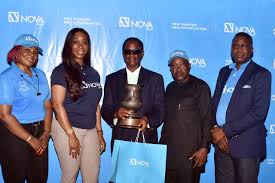
NOVA Bank Partners with the Nigeria Cup Golf Tournament to Champion Golfing Excellence


NOVA Bank has reaffirmed its commitment to the well-being and interests of high-net-worth individuals by sponsoring the 27th Nigeria Cup Golf Tournament. Hosted at the prestigious Ikoyi Golf Club 1938, the annual tournament for 2024 took place from, September 21st, to Saturday, September 28th, 2024.

The Nigeria Cup Golf Tournament, organized by the Ikoyi Golf Community Nigeria Association (IGCNA), showcased the remarkable talent of golfers and the sport’s capacity to foster connections across board. This year, Mr, Tayo Babalakin emerged as the Nigeria Cup 2024 Champion, clinching the title with a stunning 85 gross with Handicap (HCP) 19 = 66 net. This victory etched Tayo Babalakin’s name in the history books as the 27th champion of this celebrated tournament.


As a former merchant bank serving high-net-worth clients, NOVA Bank has long valued golf as a recreation sport for business executives to network and relieve stress. The Bank's transition to a national commercial bank has not diminished this commitment but has instead deepened its relationship with the golfing community, as reflected in its ongoing partnership with the Nigeria Cup.


Mr. Phillips Oduoza, Chairman of NOVA Bank and an avid golfer, highlighted the importance of the partnership in a speech presented by Mrs. Esther Adino, on his behalf. "As a long-term partner of the Nigeria Cup and the Ikoyi Club Golf Section, this annual event is always a delight for us at NOVA. It provides a unique opportunity to engage with our esteemed customers and the broader community while celebrating the beautiful game of golf. For over four years, NOVA Bank has been a proud supporter of this tournament, a sponsorship that aligns with our dedication to fostering wealth creation and enhancing the well-being of our customers. Golf plays an essential role in that mission, allowing us to connect with our HNI clients in a meaningful and engaging environment. We consider ourselves long-term sponsors of this tournament, and we are pleased to deepen our partnership with Ikoyi Golf Club. We look forward to exploring new opportunities for collaboration to elevate this esteemed club further."


Reiterating NOVA's involvement, Mrs. Chinwe Iloghalu, Executive Director of Institutional and Commercial Banking at NOVA Bank, added, "Our support of the Nigeria Cup reflects our commitment to offering our high-net-worth clients and C-suite executives an atmosphere of relaxation, well-being, and healthy competition. As a commercial bank, we continue to develop tailored products for SMEs and retail clients, including our groundbreaking NOVA Phygital mobile banking, which redefines personal banking experiences. The NOVA Phygital platform is designed to provide seamless financial solutions, ensuring our clients can manage their wealth effortlessly while enjoying the lifestyle they deserve. We remain dedicated not only to supporting our corporate customers’ businesses but also to helping them stay fit, relaxed, and focused. Golf is the perfect avenue to achieve this balance."


Mr. George Etomi, Chairman of the 2024 Nigeria Cup Organizing Committee, commended NOVA Bank for their unwavering support. "NOVA Bank’s consistent sponsorship of the Nigeria Cup truly embodies the spirit of this clubharmony through recreation. Their partnership exemplifies the harmony and shared vision that has made them an integral part of our journey. We are thankful for NOVA’s dedication and look forward to more opportunities to create lasting impacts together."


As NOVA Bank continues its growth trajectory, expanding its exceptional services to retail and SME markets, it remains committed to creating meaningful experiences for its high-net-worth clientele, while embracing a broader audience through innovation and customer-centered solutions. The partnership with the Nigeria Cup Golf Tournament reflects the values that define NOVA BankUniqueness, Leadership, Teamwork, and Passion 


NOVA Bank has reaffirmed its commitment to the well-being and interests of high-net-worth individuals by sponsoring the 27th Nigeria Cup Golf Tournament. Hosted at the prestigious Ikoyi Golf Club 1938, the annual tournament for 2024 took place from, September 21st, to Saturday, September 28th, 2024.

The Nigeria Cup Golf Tournament, organized by the Ikoyi Golf Community Nigeria Association (IGCNA), showcased the remarkable talent of golfers and the sport’s capacity to foster connections across board. This year, Mr, Tayo Babalakin emerged as the Nigeria Cup 2024 Champion, clinching the title with a stunning 85 gross with Handicap (HCP) 19 = 66 net. This victory etched Tayo Babalakin’s name in the history books as the 27th champion of this celebrated tournament.


As a former merchant bank serving high-net-worth clients, NOVA Bank has long valued golf as a recreation sport for business executives to network and relieve stress. The Bank's transition to a national commercial bank has not diminished this commitment but has instead deepened its relationship with the golfing community, as reflected in its ongoing partnership with the Nigeria Cup.


Mr. Phillips Oduoza, Chairman of NOVA Bank and an avid golfer, highlighted the importance of the partnership in a speech presented by Mrs. Esther Adino, on his behalf. "As a long-term partner of the Nigeria Cup and the Ikoyi Club Golf Section, this annual event is always a delight for us at NOVA. It provides a unique opportunity to engage with our esteemed customers and the broader community while celebrating the beautiful game of golf. For over four years, NOVA Bank has been a proud supporter of this tournament, a sponsorship that aligns with our dedication to fostering wealth creation and enhancing the well-being of our customers. Golf plays an essential role in that mission, allowing us to connect with our HNI clients in a meaningful and engaging environment. We consider ourselves long-term sponsors of this tournament, and we are pleased to deepen our partnership with Ikoyi Golf Club. We look forward to exploring new opportunities for collaboration to elevate this esteemed club further."


Reiterating NOVA's involvement, Mrs. Chinwe Iloghalu, Executive Director of Institutional and Commercial Banking at NOVA Bank, added, "Our support of the Nigeria Cup reflects our commitment to offering our high-net-worth clients and C-suite executives an atmosphere of relaxation, well-being, and healthy competition. As a commercial bank, we continue to develop tailored products for SMEs and retail clients, including our groundbreaking NOVA Phygital mobile banking, which redefines personal banking experiences. The NOVA Phygital platform is designed to provide seamless financial solutions, ensuring our clients can manage their wealth effortlessly while enjoying the lifestyle they deserve. We remain dedicated not only to supporting our corporate customers’ businesses but also to helping them stay fit, relaxed, and focused. Golf is the perfect avenue to achieve this balance."


Mr. George Etomi, Chairman of the 2024 Nigeria Cup Organizing Committee, commended NOVA Bank for their unwavering support. "NOVA Bank’s consistent sponsorship of the Nigeria Cup truly embodies the spirit of this clubharmony through recreation. Their partnership exemplifies the harmony and shared vision that has made them an integral part of our journey. We are thankful for NOVA’s dedication and look forward to more opportunities to create lasting impacts together."


Meet Julius Rone the Gas Kingpin behind Nigeria's First Floating Liquified Natural Gas Plant

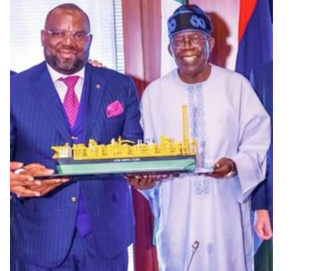
Versatile businessman Julius Rone,has just loudly stamped his feet with authority on Nigeria's gas sector as a king.His company UTM offshore,has secured the licence to build NIgeria's first floating liquefied natural gas (LNG) facility. This ambitious project marks a significant milestone in Nigeria’s quest to enhance energy infrastructure and solidify its position as a key player in the global LNG market.

The Nigerian Midstream and Downstream Petroleum Regulatory Authority issued the license-to-construct to the company for an LNG project estimated to produce 2.8 million metric tons per year. “This marks a significant milestone and aligns with the gas expansion ambitions of the government” as contained in the Petroleum Industry Act (PIA) 2021",Ahmed Farouk,NMDPRA boss,alluded.

The project is in line with the nation’s aspiration to tap its 206 trillion cubic feet of proven gas reserves; most of which are currently either flared or re-injected into wells.

Ahmed said UTM was initially granted a license to build 1.2 million tons per annum facility in 2019, but it was upgraded to 2.8 million tons “because of increased LNG demand in the market.

The plant, located in offshore Akwa Ibom state in the oil-rich Niger Delta, is expected to be inaugurated in 2028, with first-gas a year later. It will produce LNG, petroleum gas and condensate.

On his path UTM Chief Executive Officer, Julius Rone,said  "the company had already signed a memorandum of understanding with the African Export-Import Bank in 2021 to raise as much as $2 billion for the project, and the bank has received a first-level approval to invest $350 million in the project.

He said the company had also concluded contracts with Japan’s JGC Corp. and Houston-based KBR Inc. to design the project, with Vitol Group having an off-take agreement for LNG produced at the facility.Also, last year, the company signed a deal that saw state-owned Nigerian National Petroleum Co. Ltd. take a 20% stake in the project".


“It is a stranded gas that can only be monetized through a floating LNG technology. It will only add to Seplat’s balance sheet to say they have a ready-made buyer for a gas they have not developed.”


According to him, “This achievement is not just a License to Construct; it is a testament to the collaborative spirit and commitment to excellence shared by our teams. The guidance and thorough review process by NMDPRA have been instrumental in navigating the complexities of this endeavour, ensuring compliance with industry standards and fostering a productive partnership.”

The UTM FLNG boss stated that the journey toward this milestone began with concept studies in 2019, followed by the pre-FEED phase in June 2021 and the successful completion of the FEED phase in October 2023.

He said, “UTM Offshore Limited, the main sponsor of the UTM FLNG Project, signed the Head of Terms with NNPC Limited in July 2023 and finalized the Shareholders Agreement with NNPC Ltd and the Delta State Government in December 2023.

“As UTM FLNG Limited moves forward into the Engineering, Procurement, and Construction (EPC) phase, the company remains committed to conducting operations with integrity, sustainability and respect for the communities and environment in which it operates.”

Expressing profound gratitude to President Tinubu, for his “unwavering support to the gas sector and the UTM FLNG project in particular,  Rone stated that the project aligns with the President’s promise to develop Nigerian gas resources as a source of sustainable energy and economic development for the country.

The UTM boss acknowledged the collaborative efforts of the NMDPRA and the dedication of all stakeholders involved in bringing this project to fruition. He also thanked the GCEO of the Nigeria National Petroleum Company Limited (NNPCL), Mallam Mele Kyari for the support from NNPCL for believing in UTM Offshore to deliver on the project.


Profile of Julius Rone

Rone is a seasoned administrator and Industrialist with vast experience spanning over a decade in both the public & private sectors of the Nigerian economy, as a major player in the oil and gas space.


He worked as a protocol assistant at the Oil Mineral Producing Areas Development Commission (OMPADEC) from 1995 to 2000 and in the year 2000 to 2008 he worked with the Niger Delta Development Commission (NDDC) as the protocol assistant to the Chairman.

From 2008 till date, he has been the group managing director of UTM Group of Companies. Rone came on board as Charge De’ Affairs of the UTM Group of companies, viz: UTM Offshore Limited; UTM FLNG Limited; UTM Energy Limited.

Also, he worked with UTM Dredging Limited; UTM Engineering and Construction Limited: UTM Properties Limited; UTM Logistics and Marine Services Limited; MWS Allied Services Limited; Water Petroleum Limited; SBM Limited; UTM Ghana Limited; and UTM-CTK Ghana Limited.

In 1986, Rone had his First School leaving certificate from Mowoe Primary School, Warri, Delta State. He then proceeded to Uwangue College, Warri, Delta State, where he obtained his Senior School leaving certificate in 1992.

He is an alumnus of the Obafemi Awolowo University, Ile – Ife and the University of Calabar where he attained his advanced diploma and Post Graduate Diploma in Business Administration respectively.


Rone holds membership portfolios in the Institute of Directors (IoD), American Society of Administrative Professionals (ASAP), American Management Association (AMA), International Association of Administrative Professionals (IAAP) USA, Association of Associate Executives (AAE) among others.

The business mogul was born on June 25, 1968 into the family of Chief S. S. Rone, the Obazuaye of Warri Kingdom, in Delta State of Nigeria.

UTM Offshore

State-owned oil company Nigerian National Petroleum (NNPC) entered heads of agreement with UTM Offshore to purchase a 20 percent equity stake in the project in July 2023.

In December 2023, UTM Offshore, the Delta State Government, and NNPCL signed a shareholder agreement to jointly develop the project.

The project will be owned by UTM FLNG (72 percent), a special-purpose vehicle formed for the development of the project by UTM Offshore, NNPC (20 percent) and Delta State Government (8percent).

The project is expected to produce 1.5 million tonnes per annum of liquified natural gas (LNG) for export markets and 300,000 tonnes of LPG a year for domestic consumption and some quantities of condensate.

Location details

The UTM FLNG facility is being developed at the Yoho field at a water depth of 64m.

The Yoho field is situated within oil mining lease (OML) 104, approximately 60km from shore. It is owned by ExxonMobil (40percent, operator) and NNPC (60 percent) and commenced production in 2003.The project will cost $5 billion.


Dangote sets record straight on IPMAN payment tales

The Dangote Petroleum Refinery wishes to clarify that it has not received any payments from the Independent Petroleum Marketers Association of Nigeria (IPMAN) to purchase refined petroleum products.

Although discussions are ongoing with IPMAN, it is misleading to suggest that they (IPMAN Members) are experiencing difficulties loading refined products from our Petroleum Refinery, as we currently have no direct business dealings with them. Consequently, we cannot be held responsible for any payments made to other entities.

The payment in mention has been made through the Nigerian National Petroleum Company Limited (NNPCL), and not us. In the same vein, NNPCL has neither approved, nor authorised us to release our Premium Motor Spirit (PMS) to IPMAN.

We would like to emphasise that we can meet the nation's demand for all petroleum products, including petrol, diesel, and aviation fuel. At present, we can load 2,900 trucks per day and we have also been evacuating petroleum products by sea. We advise IPMAN to register with us and make direct payment as we have more than enough petroleum products to satisfy the needs of their members.

Furthermore, we believe it is instructive for all stakeholders to refrain from making unfounded statements in the media, as that could undermine the economic re-engineering efforts of His Excellency, President Bola Ahmed Tinubu. Conducting business through public speculation is counterproductive and unpatriotic.

In the interest of our country, we encourage all stakeholders to collaborate and heed the advice of President Tinubu, while promoting a unified approach, rather than engaging in media conflicts and needless propaganda.


Anthony Chiejina

Group Chief Branding and Communications Officer

31st October, 2024

 P

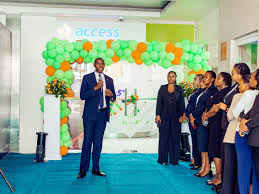
Access Bank acquires BancABC Tanzania...Now Acesss Bank Tanzania

Access Bank PLC, has successfully satisfied all legal and regulatory requirements to complete its acquisition of African Banking Corporation (Tanzania) Limited (“BancABC

Tanzania” or “BancABC”). With the acquisition now finalised, the entity in Tanzania will operate under the name Access Bank Tanzania Limited, further consolidating Access Bank’s presence in the East African region. This milestone also builds on Access Bank’s recent acquisition of the consumer, private, and business banking operations of Standard Chartered Bank Tanzania. The
newly formed Access Bank Tanzania will leverage its inherent strength and that of its parent company, Access Bank Plc, to offer a comprehensive suite of financial solutions aimed at fostering economic growth in Tanzania.
Commenting on this significant milestone, Seyi Kumapayi, Executive Director, African Subsidiaries, Access Bank Plc, stated: “This milestone represents a crucial step in our East African growth strategy, reinforcing our commitment to Tanzania's economic development. By integrating BancABC Tanzania into the Access Bank Group, we will enhance our ability to provide diverse and innovative financial solutions to meet the evolving needs of our customers. Our goal is to facilitate greater inter- and intra-African trade, while empowering local communities, especially women and youth, through improved access to banking services and financial opportunities.”
John Imani, Managing Director of Access Bank Tanzania, also shared his perspective, saying, “We are excited to officially become part of the Access Bank family. This marks a new era for our operations as we bring together the best of both institutions to create a stronger and more competitive bank that will serve the needs of our customers. Our shared commitment to delivering excellent service and driving financial inclusion will guide us as we integrate and grow in Tanzania.”
With the conclusion of the acquisition, Access Bank Tanzania customers will benefit from banking with an institution possessing a world-class class payments gateway and supported by a dynamic ecosystem of local and international partnerships. Furthermore, Access Bank’s international expansion and its deepened presence in key trading corridors across Africa, enables it to bridge the gap between cross- border and domestic transfers across all business segments while servicing global payments and remittances efficiently.

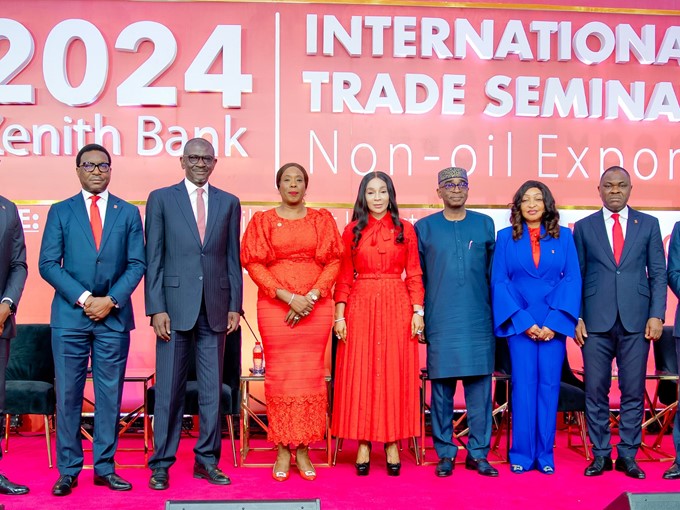
Zenith Bank Trade Seminar! Stakeholder advocates increased investment in Non-oil Export products as panacea for Economic Diversification


Stakeholders unanimously called for concerted efforts towards adding value to non-oil export products by processing them into semi-finished and finished goods in order to unlock
significant economic benefits for the nation. This clarion call was made at the 9th Edition of the Annual Zenith Bank International Trade Seminar themed “Nigerian Non-Oil Export
Industry: Awakening the Giant”, which was held on Wednesday, September 4, 2024, at the Civic Centre, Victoria Island, Lagos and virtually.
In her welcome address, the Group Managing Director/Chief Executive Officer of Zenith Bank Plc, Dame (Dr.) Adaora Umeoji, OON, highlighted the importance of non-oil export as
a catalyst for job creation. According to her, “Our theme;Awakening the Giant,speaks directly to the untapped potentials within the non-oil segment of the economy and how to
optimize them. This involves an increase in the number and volume of exportable non-oil items and value addition to exportable items into finished products. Increasing the number and volume of exportable non-oil products implies more business for you, our esteemed exporters, and increased foreign exchange earnings for our country. In addition, this sector will drive employment generation for Nigerian youths who constitute 60% of the estimated 233 million population, and Zenith Bank is committed to being at the forefront of these efforts.”
Delivering his keynote address, the Secretary, National Action Committee, AfCFTA, Mr. Segun Awolowo, commended Zenith Bank and its leadership led by the Founder and Chairman of the Board, Jim Ovia, CFR, for its laudable initiative in organizing an annual export seminar targeted towards exploring opportunities for growth in Nigeria’s non-oil
export industry and for its consistent exploits in supporting the implementation of the AfCFTA. Commenting on the theme of this year’s export seminar, he added that “In awakening the giant, we must focus on scaling production, productivity and value addition for some specific export products with high potential across three main sectors – solid
minerals, agriculture and petro-chemicals. We should also aim to capture at least 5% of the global trade and export volumes for these products. Additionally, in the genie bottle is the services sector, which is not only a major contributor to Nigeria’s GDP but also a key driver of economic diversification, job creation, and innovation.”
Also in his keynote address, the Managing Director of Nigerian Export Import Bank (NEXIM), Alhaji Abba Bello, emphasized the need to amplify the export of services in order to facilitate economic growth. In his words, “A key area that needs mentioning is the need to intensify efforts to support the promotion of export of services to leverage on the sector’s economic strength in which the services sector annually contributes over 50% to the GDP.Specifically, strategic frameworks need to be developed to complement current Government’s US$620 million programme under the Digital and Creative Enterprise (IDiCE), which is designed to empower youths to create IT and skilled / technical jobs that could promote and expand export of ICT and creative industries products and services.”
In his goodwill message, the Governor of Lagos State, His Excellency Babajide Olusola Sanwo-Olu, represented by The Honourable Commissioner for Commerce, Cooperatives,Trade and Investment, Mrs. Folashade Ambrose-Medebem, highlighted the efforts of the Lagos State Government in facilitating non-oil export for the growth of the Nigerian
Economy. He said, “This seminar’s theme resonates deeply with the strategic objectives of the Lagos State Development Plan 2052. Nigeria’s creative economy is a powerful engine
of growth and a key pillar of our export diversification strategy. Our focus is on value addition—transforming raw agricultural products into finished goods that command higher
prices in international markets. For instance, Lagos State is rapidly becoming a hub for the processing of cocoa, cashew nuts, palm oil, and sesame seeds. These products, when
processed and packaged to international standards, can significantly boost our export revenues and create thousands of jobs for our citizens. The manufacturing sector offers another promising avenue for export diversification. Our vision is to transform Lagos into a global manufacturing hub, where high-quality, made-in-Lagos products are exported to
every corner of the globe.
Also in his goodwill message, the Governor of Kano State, Engr. Abba Kabir, represented by the Special Adviser, State Affairs, Usman Bala Muhammad, emphasized strategic advantages in economic diversification in non-oil exports. In his words, “Our strength begins with agriculture, which has been the cornerstone of our economy for decades. Kano’s
agricultural sector has a strong base that we are leveraging for diversification. However, diversification is not just about increasing crop yields; it is about adding value. Through
strategic investments in agro-processing, we are converting raw agricultural products into finished goods, creating jobs, and enhancing local consumption. By aligning our export
diversification strategies with global market trends and standards, and leveraging opportunities such as the African Continental Free Trade Area (AfCFTA), we can significantly expand Nigeria’s non-oil exports to African markets and beyond.
Speaking on diversification, the Governor of Zamfara State, Dr. Dauda Lawal, represented by the Commissioner of Finance, Abdullahi Bello Auta, urged stakeholders to explore other untapped areas for export. According to him, “One major important sector which contributes to non-oil export which is not harnessed and which is giving us a lot of trouble simply because it is not organized is the mining sector. I can tell you with all sincerity and courage that once we are talking of mineral resources in Nigeria, Zamfara state is the hub. There is no single solid mineral that you can talk of that you cannot find here in abundance and in good quality.”
Zenith Bank launched the Non-Oil Export Seminar in 2015 as an initiative to deepen the discourse on promoting the non-oil export business in Nigeria, and remains committed to
promoting the non-oil export sector in Nigeria by identifying emerging opportunities which help stimulate non-oil exports and develop robust financial products as well as incentives for operators in the sector.

Sign Up To Newsletter & Stay Updated

Subscribe to our newsletter

Please insert your API key for mailchimp.